
On our own!

Hey guys hope the last post was useful or in line with what you already know. This post will cover what was told to my parents and I when I was first diagnosed, the treatments I’ve used, and what I want to use in the future! Thanks for reading.

Shots, needles, insulin, sliding scale,  glucose monitor, sugar free, carb counting, lows, highs, chronic disease, we’re close to a cure,  Diabetic Ketoacidosis, Endocrinologist, A1c, health insurance, cost.

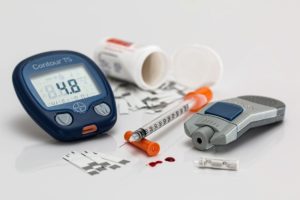
Just a few words that before being diagnosed weren’t really thought of or even heard. Well now we were in it. My parents at first were the brains of controlling my diabetes. I remember the smell of alcohol swabs and the sting of poking my finger and syringes in my arm the most. It’s funny looking back at how I swabbed my finger with rubbing alcohol and changed lancets every time I checked my blood. Now a days I am lucky if I change em every couple months. Rubbing alcohol? New lancets? New phone who dat?? Those of you who have T1D will understand!

At this time I was taking only Humalog (rapid acting) and Humalin (long acting). I believe I was taking Humalin in the morning and evening, and Humalog intermittently through the day during meals and highs. One thing I didn’t mention in the diagnosis blog is that I was out of school (2nd grade) for about a month. I went to a private Christian k-12 school from k-2nd grade. It was really small, and so there were no other kids that had type 1 diabetes and most of the faculty were uneducated about type 1 diabetes. Our school nurse was pretty easy to teach about what to do with me when I was going to eat or what to do when my blood sugar was what it was at the time. She also got all the information of my sliding scale and would calculate up the dose and call my parent and cross reference how much insulin I should take, and after they agreed on a dose it was time for my shot! Good communication between caregivers was crucial for managing my then 7 year old T1 diabetes.

I remember I had to go to the nurse very regularly to test my blood sugar, and take injections. Majority of people don’t understand that with insulin you can eat anything you want, but you just have to adjust for it. I get that its confusing but its funny looking back at people helping me. There was this one time when my principle wanted to prepare me a snack and tried to give me a hard boiled egg with almond butter, because I didn’t have to adjust much for it. To which I replied, “No thanks!”. We had these books that showed nutritional values for common foods, and one of the books had all popular restaurants nutritional value, and those made calculating my dose a lot easier! There’s tons of information out now days that make carb counting easy. Apps, pocket books, nutritional classes are a great way to dial it in and get better glucose control of T1D! (Disclaimer) Earlier I said that “with insulin you can eat anything you want” well I guess technically that’s true, but that is not the smartest, most efficient way to control diabetes. There are some great meal solutions that are pretty common sense that help insulin work better at controlling your glucose intake.

I began to understand my body, and know when something wasn’t right. If I became shaky with cold sweats I knew that I should test my blood sugar and it would be low. I would then drink some orange juice and eat peanut butter and crackers, and within about 10-15 minutes I would be good to go. High blood sugars were harder to notice at first, but I started to become more aware due to other people calling me out when I was acting mean or hyper, and I would test, and my blood sugar was sky high! I was told the importance of “glucose control” early on. I understand the why a lot better now. When my blood sugar is high multiple things occur in my body that over time may be devastating to my microvasculature. A lot of damage happens when a T1D goes from low to high. I’ve done this plenty. I test and I am low, then I eat something to correct the low, and then mistakenly overcorrect and goes high. This causes terrible oxidative damage to my vasculature. That’s why constant glucose management is so important, and proper carb counting is a must. I use to think and still feel that when I’m low I need to eat a whole cake to bring it up! When in reality I could eat a very small slice that has 20 grams of carbs and wait 15 minutes and test again and see the new blood sugar. Usually, even that little amount should suffice unless I have active insulin still in my system.

About 5 years later, I was now living with my mom in Arizona, my dad in New Mexico, and I was about to hit puberty. Which means even crazier blood sugars. My A1cs were around the 12 range. An A1c is blood test to determine an average of blood sugars, usually of the past 3 months. A good A1c is about 6. At this time I was taking Humalin in the mornings with Humalog throughout the day and Lantus at night. My mom was still in control of all of this and I had little autonomy of my diabetes. This is around the time my doctor suggested an insulin pump. My mom was dealing with some personal problems, and I decided it was best to move back with my dad and start pump therapy.

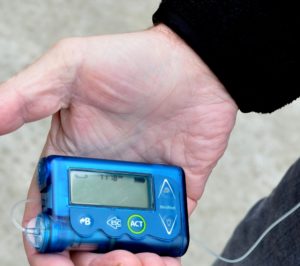
Pumps made my life so much easier, and I personally gained a lot more responsibility and control of my own health. I’m still on a pump. I can keep my A1cs around 6 by testing regularly and carb counting correctly and inputting those reading into my bolus wizard. However, there are still some days that life happens and I forget to manage properly or I get into bad habits.

The thing about having type 1 diabetes is that I never have a break from it, and so motivation and continuous care slips through the cracks. I think a great way to prevent this is staying active and realizing how much better my body feels when I’m in range. That’s it. I started to realize how much happier I was when I was mountain biking/snowboarding/lifting weights while maintaining  a bg between 80-120 mg/dl throughout the activity. Regular endocrinologist visits also help to kick me in gear, and helps me pay attention to the things that matter aka  my health. I just recently visited my endocrinologist and we discussed getting a CGM (continuous glucose monitor) and a new pump and that is what I plan on getting in the near future.

 

Type 1 vs Type 2

Hey guys! Hope the weeks been solid! In this blog I will write a little bit about what Type 1 diabetes is, because I’m sure if you have it you’ve realized how little the public knows about this disease. The difference between Type 1 and Type 2 must be defined for us to progress toward better treatments and a cure. I’m sure most of you know a lot about this but I figure that there can never be enough information out about this subject. I’m sure I may miss some points in this. Feel free to comment and add! I will also follow my Diagnosis Story blog with what my parents and I were told on my next blog.

Diabetes in whole is a disease affecting the body’s ability of digesting, absorbing, and utilizing glucose. Glucose is a simple sugar that is used for your body to produce energy, and insulin is essentially a key that allows the glucose to enter the cell and begin the process of producing energy. If this homeostasis is, disturbed, negative consequences occur. Normal blood glucose concentration is usually between 80-120mg/dl (“Current State of Type 1,” 2015). If blood glucose levels are too high then a condition known as hyperglycemia evolves, and insulin is required to lower it. Signs and symptoms consist of excessive thirst, urinating frequently, and can lead to microvascular destruction. If blood glucose levels are too low then a condition known hypoglycemia occurs, and ingesting glucose is required to raise blood glucose. Signs and symptoms are as follows: confusion, loss of coordination often mistaken as intoxication, cold sweat, loss of consciousness, and can lead to death if hypoglycemia isn’t reversed with the help of glucose (honey, glucose tabs, or other simple sugars that can be absorbed into blood stream quickly and converted to glucose.

The most common of the 2 main types of diabetes is type 2 diabetes, and the best definition of this disease is their bodies ability to produce insulin cannot meet their metabolic demands. Meaning they still produce insulin, however the amount of glucose they’re consuming in the forms of carbohydrates and sugars outmatches how much insulin they’re producing. This disease usually affects elderly obese people with a family history of the disease. They can control their blood sugars usually with diet and exercise, but may need to get on insulin and other medications as deemed appropriate by their physician (“Brown Adipose Tissue,”2013).

Type 1 diabetes is an autoimmune disease. I will use myself as reference for describing the pathology. Something in my body, more specifically my pancreas and even more specific in my beta cells was identified as foreign by my immune system which was then attacked and killed. Beta cells are responsible for producing the hormone insulin. Insulin is the only way to control blood glucose levels and to ensure a healthy lifestyle (“Standards of Medical Care,” 2017).

This isn’t the first time I’ve written about the differences in diabetes, and I think I bypass a lot of important information, because I’ve lived with it for so long that I tend to assume things are obvious. In saying that please let me know if there is anything you don’t understand or would like addressed. Thanks for reading, and in the next post I’ll go into the treatments that I took home, the ones I’ve used, and the ones I use now and what I want to start using!
Thanks!
-Dillon

My Diagnosis story!

Hey everyone! First blog for me, and so please leave me any comments, questions, concerns so that I can figure this all out and be able to share my experiences as a type 1 diabetic! For this first blog I’ll go into the story of my diagnosis and share some things that I went through!

I grew up in a small town in southwest New Mexico called Silver City. I rode mtn bikes and horses with my parents. I raced BMX, and overall was a healthy kid. I became sick spring of 2001. Felt like a bad cold or the flu. I had been sick before, and 7 year old me didn’t think much of it other than my mom making me stay inside and not go play… Well, we went into the family doctor and was told what we expected: Bad Cold. My parents were advised to give me lots of ORANGE JUICE and rest. We would later find out that was a huge mistake. Went back home after the doctors and within the next couple days things got worse.

I started to drink almost a gallon of orange juice a day, and  I stopped eating. I remember I could never get enough to drink and was peeing every 5-10 minutes. We would go get pizza once a week and I would usually get the personal pan peperoni, and would crush it. This is the one thing that made me realize something different was happening with me, because when we went to get pizza I tried to take a bit out of a slice and had no appetite. The days that followed were no better. At this point I was sleeping most of the day, and only getting up to drink and throw up. My parents started seeing how much weight I was losing. I was probably 70lbs soaking wet, and through the last couple weeks I was down into the 50s. We went back to the doctors, and they reasoned that it was probably mono. Again we were advised to have me drink a lot of fluids like juice, and eat Saltine crackers. My parents, being the badasses they are, decided to get a second opinion and a third doctors visit.

Even with all of my signs and symptoms, this doctor wasn’t really looking at other causes.  My parents were researching other reasons for why their son was dwindling away right before their eyes, and came across Type 1 Diabetes. After this doctor tried to tell them, “Its probably some sort of viral infection”, my parents demanded them test for T1D. They didn’t even have a glucose meter in the office, and so after much skepticism they had me do a urinalysis and sent me home.

The following day my sister and I sat inside my dads truck in downtown silver City as my dad was helping out with the Tour de Gila bike race. My dad had a Motorola cell phone at the time and received a call that he told me went something like this, ” Mr. Robinson we need you to bring your son to the emergency room at Gila Regional Medical Center right away.” My dad came running to the vehicle grabbed my mom and we hauled ass to the hospital which was about 10 minutes away. As we arrived I had a nurse standing by the doors with a wheelchair which I was promptly set in and wheeled into a room where an IV was placed in my left hand, and a large box was brought out with a weird looking machine inside. I was poked on the finger with a square looking crayon that had a needle in it, and some of my blood was placed into this machine. Eventually the thing beeped and the doctor and nurses kind of gasped. Guess their glucose monitor read glucose levels of up to 800mg/dl, and mine wouldn’t register on the machine. After that the next couple days were a blur and I wasn’t completely sure what was going on, besides me getting poked with a bunch of needles. I had a really nice nurse that took care of me and would be right there every time I called.

I was told  that I was type 1 diabetic which is an autoimmune disease where my body started and successfully killed the insulin producing cells in my body and that I would have this for life. The cause was unknown, and I needed to test my blood 5-8 times a day and  to take insulin when my blood sugar was high and every time I ate a meal. We were directed to Tucson Arizona where a great pediatric endocrinologist worked and taught my parents and I the niddy griddy of diabetes and how crucial it was to maintain good blood sugar. I was sent home with a bunch of insulin, different needles, machines, and books and two terrified parents! haha

So there is the basic story of my Diagnosis guys. Hope you enjoyed or could relate to in some way even if you aren’t type 1! Thanks for reading, and leave me any comments suggestions below!

Cheers!

-Dillon