
Hey guys hope the last post was useful or in line with what you already know. This post will cover what was told to my parents and I when I was first diagnosed, the treatments I’ve used, and what I want to use in the future! Thanks for reading.
Shots, needles, insulin, sliding scale, glucose monitor, sugar free, carb counting, lows, highs, chronic disease, we’re close to a cure, Diabetic Ketoacidosis, Endocrinologist, A1c, health insurance, cost.
Just a few words that before being diagnosed weren’t really thought of or even heard. Well now we were in it. My parents at first were the brains of controlling my diabetes. I remember the smell of alcohol swabs and the sting of poking my finger and syringes in my arm the most. It’s funny looking back at how I swabbed my finger with rubbing alcohol and changed lancets every time I checked my blood. Now a days I am lucky if I change em every couple months. Rubbing alcohol? New lancets? New phone who dat?? Those of you who have T1D will understand!
At this time I was taking only Humalog (rapid acting) and Humalin (long acting). I believe I was taking Humalin in the morning and evening, and Humalog intermittently through the day during meals and highs. One thing I didn’t mention in the diagnosis blog is that I was out of school (2nd grade) for about a month. I went to a private Christian k-12 school from k-2nd grade. It was really small, and so there were no other kids that had type 1 diabetes and most of the faculty were uneducated about type 1 diabetes. Our school nurse was pretty easy to teach about what to do with me when I was going to eat or what to do when my blood sugar was what it was at the time. She also got all the information of my sliding scale and would calculate up the dose and call my parent and cross reference how much insulin I should take, and after they agreed on a dose it was time for my shot! Good communication between caregivers was crucial for managing my then 7 year old T1 diabetes.
I remember I had to go to the nurse very regularly to test my blood sugar, and take injections. Majority of people don’t understand that with insulin you can eat anything you want, but you just have to adjust for it. I get that its confusing but its funny looking back at people helping me. There was this one time when my principle wanted to prepare me a snack and tried to give me a hard boiled egg with almond butter, because I didn’t have to adjust much for it. To which I replied, “No thanks!”. We had these books that showed nutritional values for common foods, and one of the books had all popular restaurants nutritional value, and those made calculating my dose a lot easier! There’s tons of information out now days that make carb counting easy. Apps, pocket books, nutritional classes are a great way to dial it in and get better glucose control of T1D! (Disclaimer) Earlier I said that “with insulin you can eat anything you want” well I guess technically that’s true, but that is not the smartest, most efficient way to control diabetes. There are some great meal solutions that are pretty common sense that help insulin work better at controlling your glucose intake.
I began to understand my body, and know when something wasn’t right. If I became shaky with cold sweats I knew that I should test my blood sugar and it would be low. I would then drink some orange juice and eat peanut butter and crackers, and within about 10-15 minutes I would be good to go. High blood sugars were harder to notice at first, but I started to become more aware due to other people calling me out when I was acting mean or hyper, and I would test, and my blood sugar was sky high! I was told the importance of “glucose control” early on. I understand the why a lot better now. When my blood sugar is high multiple things occur in my body that over time may be devastating to my microvasculature. A lot of damage happens when a T1D goes from low to high. I’ve done this plenty. I test and I am low, then I eat something to correct the low, and then mistakenly overcorrect and goes high. This causes terrible oxidative damage to my vasculature. That’s why constant glucose management is so important, and proper carb counting is a must. I use to think and still feel that when I’m low I need to eat a whole cake to bring it up! When in reality I could eat a very small slice that has 20 grams of carbs and wait 15 minutes and test again and see the new blood sugar. Usually, even that little amount should suffice unless I have active insulin still in my system.
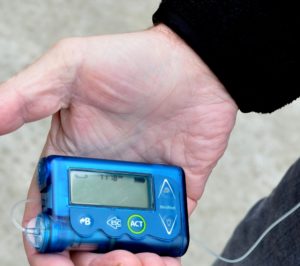
About 5 years later, I was now living with my mom in Arizona, my dad in New Mexico, and I was about to hit puberty. Which means even crazier blood sugars. My A1cs were around the 12 range. An A1c is blood test to determine an average of blood sugars, usually of the past 3 months. A good A1c is about 6. At this time I was taking Humalin in the mornings with Humalog throughout the day and Lantus at night. My mom was still in control of all of this and I had little autonomy of my diabetes. This is around the time my doctor suggested an insulin pump. My mom was dealing with some personal problems, and I decided it was best to move back with my dad and start pump therapy.
Pumps made my life so much easier, and I personally gained a lot more responsibility and control of my own health. I’m still on a pump. I can keep my A1cs around 6 by testing regularly and carb counting correctly and inputting those reading into my bolus wizard. However, there are still some days that life happens and I forget to manage properly or I get into bad habits.
The thing about having type 1 diabetes is that I never have a break from it, and so motivation and continuous care slips through the cracks. I think a great way to prevent this is staying active and realizing how much better my body feels when I’m in range. That’s it. I started to realize how much happier I was when I was mountain biking/snowboarding/lifting weights while maintaining a bg between 80-120 mg/dl throughout the activity. Regular endocrinologist visits also help to kick me in gear, and helps me pay attention to the things that matter aka my health. I just recently visited my endocrinologist and we discussed getting a CGM (continuous glucose monitor) and a new pump and that is what I plan on getting in the near future.